How to hire three engineers in two months with no recruiter
Four ways to get three senior hires done in sixty days, what each costs before and after the hire, and the one I would pick with eight people.

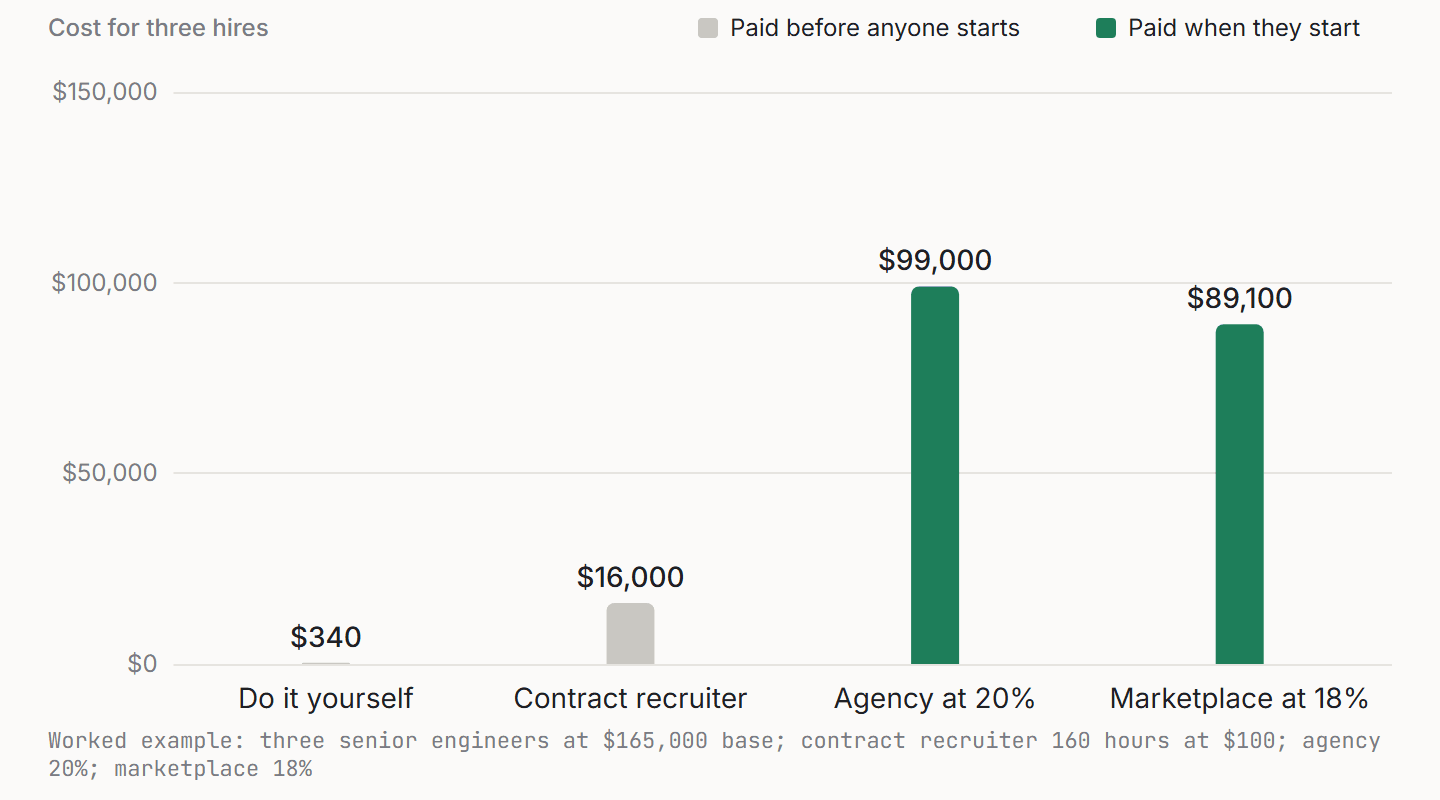
You have four options, priced from nothing to about $99,000. Three senior engineers at $165,000 each through a contingency agency at 20% is $99,000, due when they start. Doing it yourself costs no cash and about 100 hours of founder time. The two options in between are where I would look first.
Four options and what each one costs
Let me pin the example so the numbers mean something. Three senior engineers. A base of $165,000 each. Offers accepted inside sixty days. Eight people in the company and nobody whose whole week is hiring.
| Option | Paid before anyone starts | Paid when they start | Your hours, roughly |
|---|---|---|---|
| Do it yourself | About $340 in tools | $0 | 90 to 120 |
| Contract recruiter | $12,000 to 20,000 | $0 | 40 to 50 |
| Agency, contingency | $0 | $99,000 at 20% | 30 to 40 |
| Marketplace, fee you set | $0 | $89,100 at 18% | 30 to 40 |
Doing it yourself is the cheapest in cash and the most expensive in everything else. The tools are minor. LinkedIn Recruiter Lite is $170 a month, per Pin's 2026 pricing breakdown, so two months is about $340. The hours are not minor, and I get to those below.
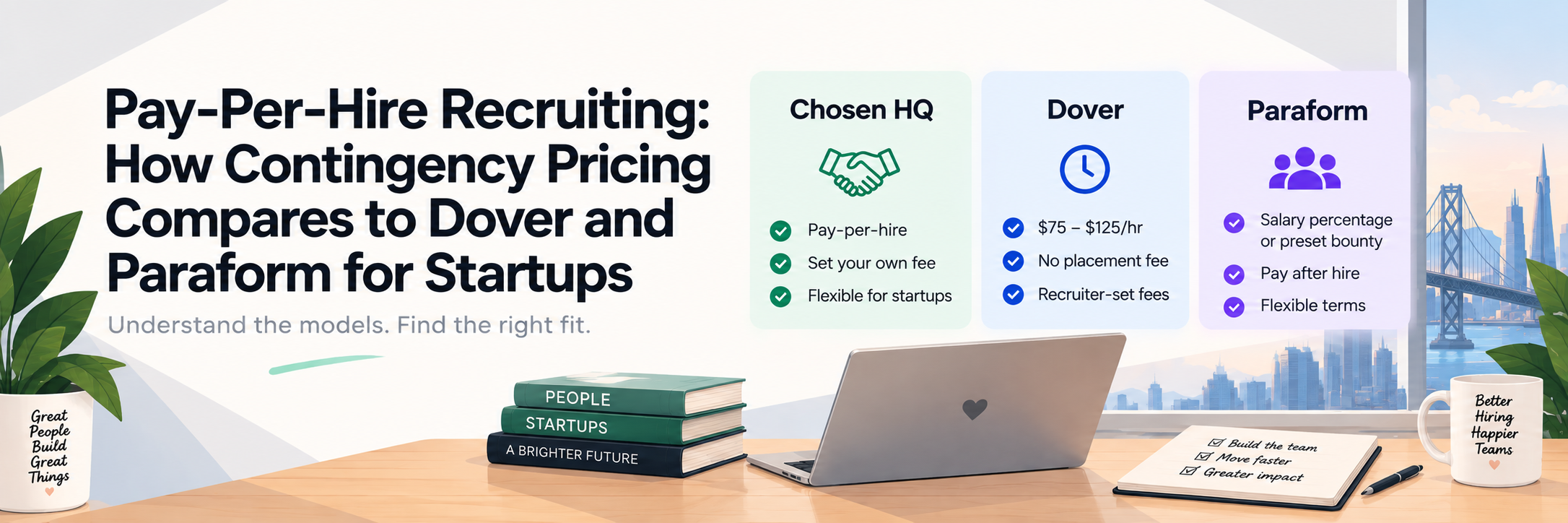
A contract recruiter bills for time whether or not anyone starts. Dover, for one, sells fractional recruiters by the hour, with a retainer or a placement fee as the other two options, and the reported rate is about $80 an hour, per HeroHunt's write-up. Call it $100 an hour, twenty hours a week for eight weeks: $16,000, paid as you go, hire or no hire. You still run the interviews.
A contingency agency charges nothing up front and a percent of first-year base when the person starts. Paraform's publicly reported fee is 20 to 25% of first-year salary, per the same write-up, and traditional agencies land in the same neighborhood. Three hires at $165,000 and 20% is $99,000. At 25% it is $123,750. The percent is the whole negotiation, and it happens before anyone has read a resume.
There is a fifth option I left off the table: retained search, where you pay part of the fee upfront and give the firm exclusivity. It exists for executive roles where the search itself is the product. For three engineers at seed it is the wrong tool, and the upfront money is the tell.
The fourth option is the one we built, so read this paragraph knowing that. On Chosen you post each role and set the fee yourself. The wizard suggests 20% and says most roles land between 15 and 25%. A person at Chosen approves recruiters onto the role and reviews every packet before you see it.
You pay when the hire starts, once, and the ATS you run the whole thing in is free. Set 18% on all three and the bill is $89,100, all of it after three people have desks.
Everyone says founders should spend most of their time recruiting
The standard advice at seed is that founders should spend a large share of their week hiring. It comes from people who have watched a lot of companies die of empty seats, and the instinct behind it is right. Nobody else can sell your company to a senior engineer the way you can.
Here is where I part ways with it. Your time is the most expensive resource the company has, and most of what hiring eats is not the part only you can do. Of the 100 or so hours it takes to fill three senior roles yourself, maybe 20 are conversations where your judgment matters: the first call where you decide whether this person raises the bar, the work session, the close.
The other 80 are logistics. Building lists. Writing the first message forty times. Scheduling around three calendars. Chasing replies. Spending your weekends on LinkedIn is not founder work; it is admin with a founder's price tag.
So the rule I use is narrower than the consensus. Spend founder time on the 20 hours. Buy, delegate or automate the 80, and prefer the option whose cost you only pay when someone starts.
The cost nobody puts in the spreadsheet
The table above lists your hours, and the reason it does is that nobody else will. Founder time never shows up on a bank statement, so it never feels like spend. Put a number on it anyway.
If your time is worth $200 an hour to the company, which is conservative for a funded seed startup, 100 hours is $20,000. That is more than the contract recruiter, a fifth of the agency bill, and it comes with an opportunity cost the agency does not have: the thing you did not ship in those weekends.
There is a quieter cost too. Sourcing alone, at night, after a full day, produces worse sourcing. You lower the bar in week five because you are tired, not because the market moved. A second person on the search, whoever it is, is partly insurance against your own fatigue.
What sixty days actually looks like
Two months is tight for three senior engineers on any of the four paths, and I would rather say so now than in week seven.
| Weeks | What happens | Who does it |
|---|---|---|
| 1 | Brief, comp band, first outreach on all three roles at once | You, plus whoever sources |
| 2 to 3 | First calls, 8 to 12 per role | You, 30 minutes each |
| 3 to 5 | Work sessions or onsites, 4 to 6 per role | You and the team |
| 5 to 6 | Offers, references, negotiation | You |
| 6 to 10 | Notice periods | The candidate's current employer |
Offers accepted by day 60 is achievable. Three people at desks by day 60 is not, unless one of them is between roles or contracting. Two weeks' notice is common in the United States, and a month is common for senior people at larger companies. Plan for starts in weeks eight to ten and you will not be surprised.
The other thing the table says: run all three searches from week one. Sequential searches feel more manageable, and they kill the deadline, because the notice period at the end does not compress.
The one I would pick with eight people
With three roles, a hard date and no recruiter, I would run two channels from day one and skip the other two.
The first channel is your own network and referrals. It is free, it produces the best signal you will get, and in my experience it fills about one role in three. Tell every engineer you respect what you are hiring for, the same day you write the brief.
The second channel is outside recruiters on pay-on-hire terms, for all three roles. You only pay for what lands, the recruiters carry the 80 hours of logistics, and the fee is a number you set before anyone starts work, not one you negotiate under deadline. Set it where good recruiters will take the role. At seed, 18 to 20% is the range I would use. A low fee saves money on hires that never happen.
I would skip paying for hours unless I had more than five open roles, because hours are the one cost that arrives whether or not the search works. And I would not sign exclusivity or a retainer at this stage. You have no idea yet which channel will produce your three people, and exclusivity means betting on one.
Two honest limits on the marketplace option. Chosen does not guarantee that any role will be filled, so keep your own sourcing running. And Chosen is small: 13 approved recruiters in September 2026, so it is one source of candidates, not the only one.
That is true of every option on this list. The others just rarely say it.
Post the three roles this week, tell your network the same day, and keep your weekends.
Questions people ask next
Is it worth paying for a job board post, or should I just use a recruiter?
A job post costs money before anyone is hired and brings applicants, not candidates. For senior engineers the reply rate on posts is low. Use a free career page for inbound and put your money where it only leaves when someone starts.
Is 20% a normal recruiter fee?
Yes. Paraform's reported fee is 20 to 25%, agencies land in the same range, and Chosen's wizard suggests 20%. Retained search costs more and takes money upfront. The percent is of first-year base, so a $165,000 hire at 20% is $33,000.
When do I actually pay a recruiter?
Contingency agencies and marketplaces invoice when the hire starts, not at offer. Contract recruiters invoice for hours whether or not anyone starts. Retained firms take part of the fee upfront. On Chosen the fee is owed when the placed candidate starts; payment terms beyond that sit in your agreement.
Sources
- LinkedIn Recruiter pricing 2026, full cost breakdown, Pin. Accessed Sep 30, 2026
- Paraform pricing and alternatives 2026, HeroHunt. Accessed Sep 30, 2026
- Dover recruiters, choose your pricing model, Dover. Accessed Sep 30, 2026