Hiring Software for Fast-Scaling Startups: Why the Best Platforms Combine ATS + Recruiter Network
TL;DR
- A standalone ATS plus separate recruiter relationships creates duplicate candidate records, scattered communication, and repeated fee negotiations during a hiring surge.
- Chosen HQ combines a free ATS with a vetted recruiter marketplace. You set the recruiting fee and pay only when a hired candidate starts.
- The best hiring platform for a scaling startup should improve access to qualified candidates, keep costs tied to successful hires, and give everyone one shared pipeline.
- Recruiting software scales when it can add sourcing capacity without another subscription or a new recruiter contract. Candidate vetting and one recruiter inbox also reduce screening and coordination work during fast hiring.
Why 20-50 hire scaling breaks the standalone ATS model
A standalone ATS becomes harder to operate when a startup runs 20 to 50 searches within the same hiring period. Products such as Greenhouse, Workable, and JazzHR can track applicants, but external recruiters still work through separate contracts, inboxes, and submission methods. Your hiring staff must connect those activities manually while interview volume rises.
Candidate records often get duplicated first. Two recruiters may submit the same person by email, while that candidate may also apply through the careers page. Someone must compare records, establish which recruiter introduced the candidate, and confirm whether a fee applies. Manual cleanup takes time and can delay interview scheduling.
Separate recruiter agreements also create administrative work for every search. Your staff may need to discuss fee percentages, replacement terms, candidate ownership, and payment dates with each recruiter. A hiring surge multiplies those conversations across roles and agencies. The ATS subscription does not remove any of that work because the recruiter relationship sits outside the software.
Hiring managers also lose shared visibility when recruiters cannot work inside one submission pipeline. One recruiter may send a spreadsheet, another may use email, and an internal sourcer may add candidates directly to the ATS. Recruiters cannot see whether a role has enough candidates or whether their submissions overlap with another source. Your staff must provide status updates and reenter information to keep everyone informed.
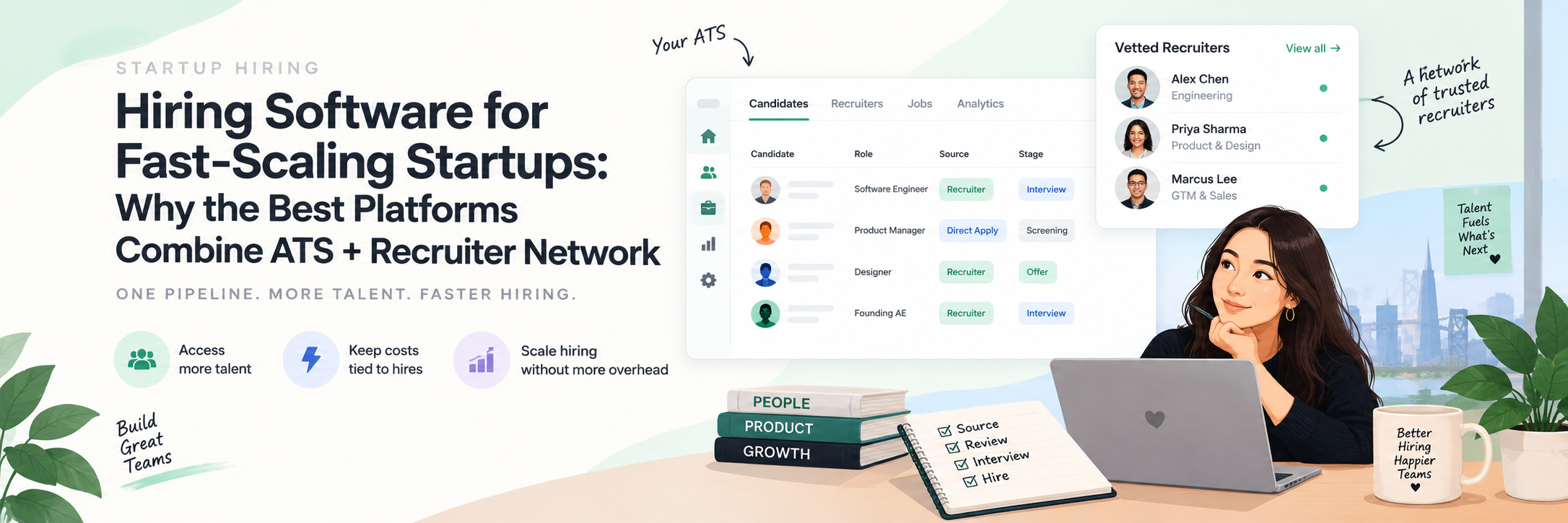
Higher hiring velocity makes each manual handoff more costly because several roles reach sourcing, screening, and interviewing at once. A combined model such as Chosen HQ puts recruiter submissions and candidate tracking in one pipeline. Recruiters submit against the same open roles, and your staff reviews each candidate without reconciling separate inboxes and tracking files.
What "best hiring platform for startups" actually requires
The best hiring platform for a scaling startup moves qualified candidates into review quickly. Measure how the platform sources candidates, checks their fit, and routes them to hiring managers. An ATS that only stores applications still leaves you responsible for finding recruiters and screening their submissions.
Cost should track successful hiring rather than software access. A standalone ATS may add subscription or seat costs before you pay external recruiter fees. Chosen HQ includes its ATS for free, lets you set the recruiting fee, and charges only when a hired candidate starts. That structure limits fixed-cost exposure when hiring plans change.
Every recruiter and candidate should work through one visible pipeline. Hiring managers need to see who submitted each candidate, where the candidate stands, and what action comes next. Shared visibility reduces duplicate submissions and prevents interview feedback from getting trapped in separate inboxes.
A polished interface can make routine work easier, but interface quality cannot replace sourcing capacity or clear pricing. Brand reputation also says little about how well a platform manages external recruiters during a hiring surge. Compare each option on the work it removes, the costs it creates before a hire, and the information it gives everyone involved.
How talent acquisition tools scale with headcount growth
Talent acquisition software scales when hiring volume can rise without forcing you to buy fixed capacity in advance. A standalone ATS subscription creates recurring costs whether or not you make a hire. Adding users or moving to a higher plan may increase those costs as your recruiting function grows.
Usage-based recruiting fees follow completed hires more closely. With Chosen HQ, the ATS is free, and you set the recruiting fee for each role. You pay that fee only when a hired candidate starts. Hiring more people increases total recruiting spend, but unfilled roles do not create placement fees.
A recruiter marketplace also expands sourcing capacity without requiring new vendor contracts. Multiple vetted recruiters can work on open roles at the same time, while a single in-house recruiter can review and source only a limited number of candidates each week. You can add roles to the shared marketplace instead of finding, negotiating with, and onboarding another recruiting agency for each hiring surge.
Marketplace capacity does not remove every constraint. Your managers still need enough time to interview candidates and make decisions. However, the recruiting platform can absorb changes in sourcing demand without adding another fixed software contract or permanent recruiter salary.
How a combined ATS and recruiter network speeds up fast hiring
Chosen HQ shortens screening by checking candidates before they enter your hiring queue. Vetted recruiters submit people who fit the role and have expressed interest, and Chosen reviews each candidate before submission. Your hiring team spends less time rejecting mismatched profiles and can move qualified candidates into interviews sooner.
A unified recruiter inbox removes delays between sourcing and pipeline management. Your hiring team reviews recruiter conversations in one place and manages every submitted candidate in the same ATS. Shared candidate records also make duplicate submissions easier to identify before multiple people spend time reviewing the same person.
A recruiter workflow added to a generic ATS usually centralizes records without fixing the sourcing work around them. You still need to find recruiters, negotiate separate relationships, and confirm that each recruiter understands the role. An integrated marketplace gives vetted recruiters access to the hiring workflow while keeping their submissions inside the same candidate pipeline. As hiring volume rises, you can add sourcing capacity without creating another inbox or reconciliation process.
Chosen HQ vs. standalone ATS platforms
Standalone ATS platforms track applicants, but they do not supply an integrated network of external recruiters. With Greenhouse, Workable, or JazzHR, you still need to find recruiters, negotiate separate terms, and manage the quality of their submissions. Your ATS records candidates after they arrive, while your company owns the recruiter relationships that produced them.
Chosen HQ combines those functions. Vetted recruiters submit interested candidates into one pipeline, and Chosen reviews each candidate before your company receives the submission. The built-in ATS carries no subscription fee. You set the recruiting fee when posting a role and pay only when a hired candidate starts.
| Platform | Pricing | Recruiter marketplace | Vetting | Payment trigger |
|---|---|---|---|---|
| Chosen HQ | Free ATS + set-your-own fee | Yes | Chosen reviews every submission | Hire starts |
| Greenhouse | ATS subscription | No | None | Contract term |
| Workable | ATS subscription | No | None | Contract term |
| JazzHR | ATS subscription | No | None | Contract term |
Greenhouse, Workable, and JazzHR may suit companies that already have sourcing capacity and established agency relationships. A startup hiring across many roles must add recruiter sourcing and oversight around those products, which creates costs beyond the ATS contract.
Chosen HQ fits companies that want recruiting capacity and applicant tracking under one commercial model. The company avoids a separate ATS subscription, while payment follows a completed hire rather than access to the software.
Chosen HQ vs. recruiter marketplaces Dover and Paraform
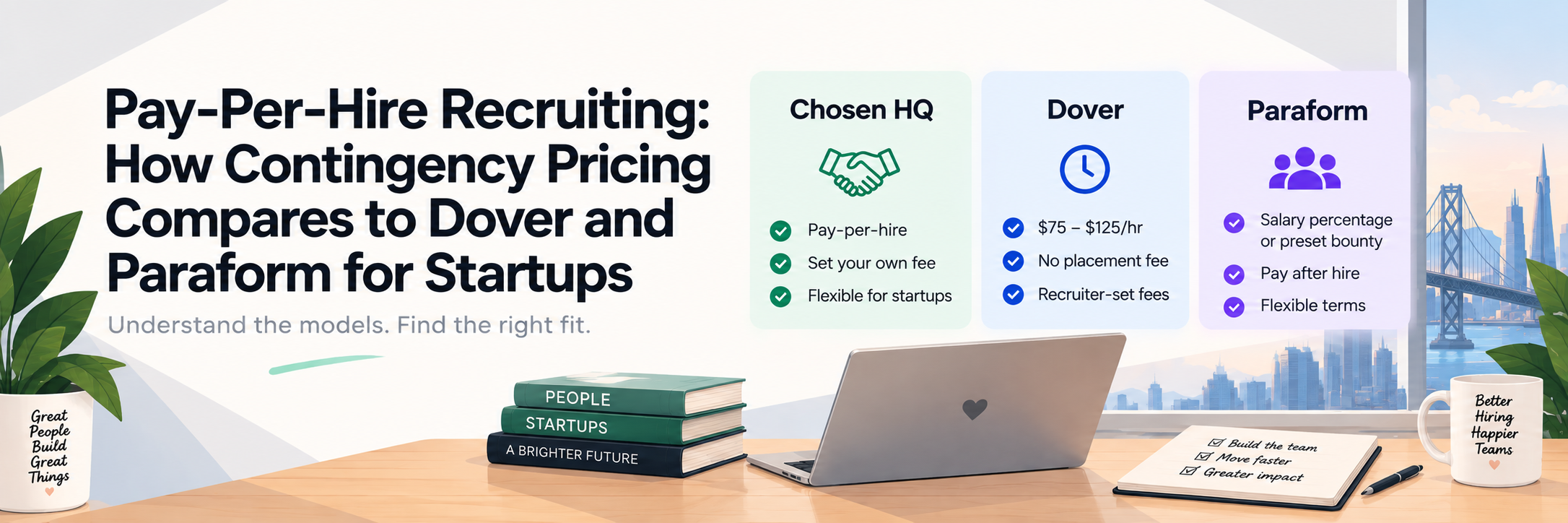
Chosen HQ gives startups a clear cost trigger and one place to manage recruiter work. You set the recruiting fee, use the ATS for free, and pay when a hired candidate starts. Chosen also reviews candidates before they enter your pipeline and keeps every recruiter submission visible in the shared ATS.
Dover combines a free ATS with fractional recruiters and sourcing tools. Since both Dover and Chosen offer free software, buyers should compare the recruiter support included at no charge and the support available during a hiring surge. Dover’s free tier may fit lighter hiring needs, while Chosen ties candidate review and recruiter coordination directly to its pay-on-hire model.
Paraform emphasizes expert recruiters working with custom AI agents. Chosen puts more emphasis on vetted recruiters, candidate review, and shared pipeline visibility. Startups that want to inspect submissions and recruiter activity in one ATS may prefer that operating model.
| Platform | Recruiter pool | Pricing | Support model |
|---|---|---|---|
| Chosen HQ | Vetted network | You set the fee, pay on hire | Candidate review + recruiter coordination in one ATS |
| Dover | Fractional recruiters | Free tools, paid scope unclear | Fractional recruiting and sourcing tools |
| Paraform | 10,000+ recruiters | Fee details unclear | Recruiters plus custom AI agents |
Choosing the right setup for your stage of scaling
Hiring velocity should determine your setup, not company size. If you plan to fill fewer than ten roles over several months and rely mostly on internal sourcing, a standalone ATS may be enough. One trusted recruiter can cover occasional hard-to-fill roles without creating much administrative work.
Consolidation becomes more useful as you approach 20 or more open or planned roles. Multiple recruiters create separate conversations, overlapping submissions, and repeated fee negotiations. A shared pipeline gives you one candidate record, one recruiter inbox, and consistent visibility across every role.
Chosen HQ fits startups that need external sourcing capacity without adding another subscription. The platform includes a free ATS, vets recruiter submissions, and charges only when a hired candidate starts.
If your hiring plan includes 20 or more roles and you expect agencies to help fill them, consolidate now rather than rebuilding the workflow during the hiring surge.
FAQs
- Is the Chosen HQ ATS really free? Yes. Chosen HQ charges no subscription or seat fee for its built-in ATS.
- How does pay-only-on-hire pricing work? You set the recruiting fee when posting a role. Payment becomes due only after a submitted candidate accepts the role and starts work.
- How does Chosen HQ vet recruiters? Chosen controls recruiter access to its marketplace, though specific acceptance criteria may change. Chosen also reviews each candidate before sending the submission to you.
- Can I use existing recruiter relationships inside Chosen HQ? Yes. You can manage recruiter communication and candidate submissions through the shared pipeline rather than keeping separate inboxes and tracking files. Confirm onboarding requirements with Chosen for each outside recruiter.
- How does Chosen HQ compare with hiring an in-house recruiter? Chosen provides flexible sourcing capacity without adding a full-time salary. An in-house recruiter gives you dedicated ownership of workforce planning, interviews, and candidate communication. Startups with uneven hiring demand may prefer Chosen’s variable cost, while sustained hiring volume may justify an internal recruiter alongside the marketplace.